

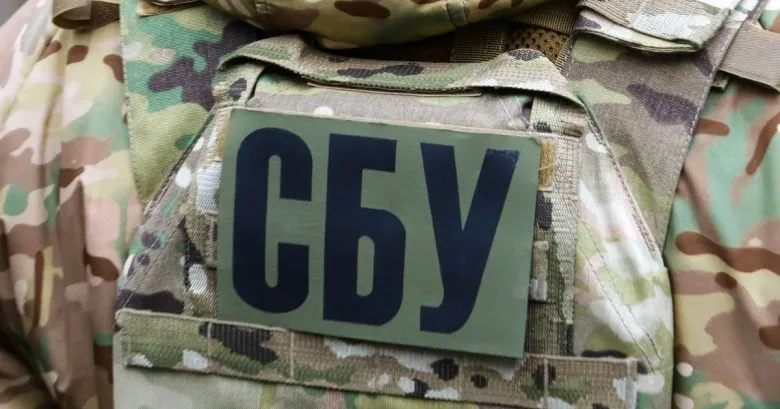
The Security Service of Ukraine has identified Colonel Marat Tsevelev of the Russian GRU, who organized the recruitment of a minor resident of Prykarpattia to adjust shelling of the Burshtyn Thermal Power Plant and other strategic facilities in the region.
This is reported by Finway
Investigation Details and Subversive Activities
According to the SBU, Marat Tsevelev, serving in the 317th Marine Special Operations Center of the Russian GRU, coordinated the preparation of missile and drone attacks on western regions of Ukraine in January of this year. Among the identified targets were the Burshtyn TPP, defense facilities, and an important electrical substation.
To obtain detailed information about the state of the energy infrastructure after the shelling, Tsevelev recruited a 17-year-old graduate of a local technical school who was looking for part-time work in Telegram channels. At his direction, the girl conducted additional reconnaissance near the Burshtyn TPP and the electrical substation, assessing their technical condition. She was to document the facilities with photos and videos and mark their geolocation on Google Maps.
“After this, Tsevelev instructed the agent to summarize the collected information and send it to him via messenger. SBU employees uncovered the hostile reconnaissance activity and meticulously documented the agent’s contacts with her handler,” the service states.
Legal Qualification of Actions and Consequences of the Shelling
At the beginning of the year, during an attempt to photograph a military facility, the girl was detained. The investigation established that Marat Tsevelev is based in occupied Sevastopol and is engaged in gathering intelligence to identify targets for strikes on Ukraine. He has been notified of suspicion of espionage in absentia, and an indictment against the recruited individual has been submitted to the court — her actions have been classified as treason in a state of war.
On February 7, Russian troops carried out another mass attack on Ukraine’s energy facilities. As a result, the Burshtyn TPP ceased operations, and the city experienced a lack of water supply and heating. According to local authorities, Russia used Kalibr missiles and strike drones, and the damage to the station was found to be severe.
The Security Service of Ukraine qualifies the strikes on energy infrastructure as crimes against humanity. Since the beginning of the heating season in 2026, the SBU has recorded at least 256 aerial attacks by Russia on energy facilities and heating supply systems in the country.
In light of these events, Russian Foreign Minister Sergey Lavrov stated in February 2026 that Russia allegedly had not initiated attacks on civilian objects, and Ukraine was the first to strike energy facilities in the Russian Federation.