

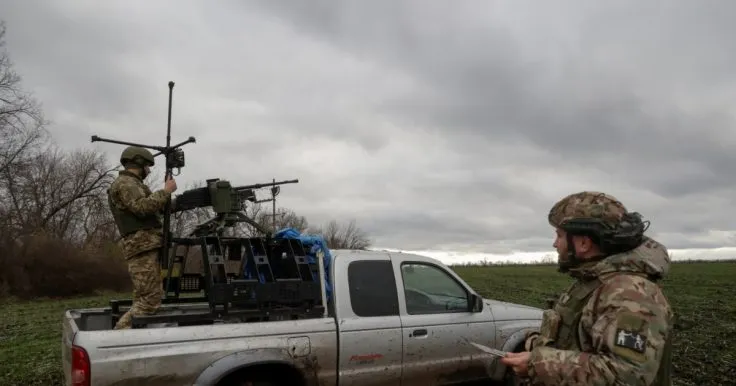
On the night of May 7, Russian forces carried out a massive airstrike on the territory of Ukraine, using 102 strike drones and decoys. This was reported by the Air Force Command, noting that the attack occurred from several directions, including Bryansk, Kursk, Millerovo, Oryol, Primorsko-Akhtarsk, as well as the occupied Donetsk and Hvardiyske in Crimea.
This is reported by Finway
Scale of the attack and impact on civilian infrastructure
According to preliminary data, as of 08:00, the Ukrainian air defense forces had destroyed or suppressed 92 enemy drones of various types, including Shahed, Gerbera, Italmas, and others. Despite this, hits from eight strike drones were recorded in six locations, as well as debris falling in four places across the country.
“According to preliminary data, as of 08:00, air defense has shot down/suppressed 92 enemy UAVs of the Shahed, Gerbera, Italmas types and drones of other types in the north and east of the country,” the report states.
Russian forces systematically use various types of weapons, including strike drones, missiles, guided bombs, and multiple launch rocket systems, against Ukrainian cities and civilian objects in all regions of the country. Such actions have a serious impact on energy facilities, medical institutions, water supply systems, and communications, depriving the civilian population of access to essential resources.
Signs of genocide and international reaction
Ukrainian authorities and international organizations classify such strikes as war crimes of the Russian Federation, emphasizing their targeted nature. Legal experts and genocide researchers point out that attacks on critical infrastructure, as well as the persecution and destruction of people with pro-Ukrainian positions in occupied territories, the deportation of children, and the destruction of Ukrainian cultural heritage may contain signs of genocidal actions.
The international community acts in accordance with the Convention on the Prevention and Punishment of the Crime of Genocide, adopted by the UN General Assembly in 1948. Currently, 149 countries that are parties to the Convention are obligated to prevent genocide and punish those responsible, regardless of the time—during war or in peacetime.
According to the provisions of the Convention, genocide is defined as actions aimed at the complete or partial destruction of a national, ethnic, racial, or religious group. Such actions include killings, causing serious bodily harm, creating conditions aimed at the destruction of the group, preventing childbirth, and forcibly transferring children from one group to another, as well as publicly inciting the commission of such crimes.
Despite numerous evidences, the leadership of Russia continues to deny the facts of targeted attacks on civilian infrastructure, hospitals, schools, kindergartens, as well as energy and water supply facilities, leading to civilian casualties and the destruction of critical objects.