

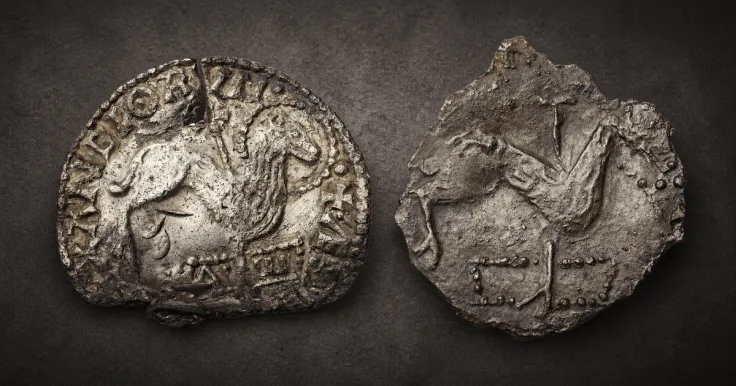
In Denmark, archaeologists have found two unique Anglo-Saxon coins known as “Agnus Dei,” which were minted over a thousand years ago. The discovery was made using metal detectors near Legumkloster, after which the valuable finds were transferred to the National Museum of Denmark.
This is reported by Finway
Coins as Reflections of Conflict and Faith
The coins date back to the reign of the English King Æthelred II, during a time when the country was facing constant Viking raids, particularly around the year 1009. In response to these threats, the king implemented not only defensive measures but also religious practices: he ordered fasting, prayer, and the minting of coins featuring Christian symbols. Instead of the traditional portrait of the monarch, the coins depicted the Lamb of God — an important symbol in Christianity, meant to symbolize hope for divine protection of the kingdom.
“Historical records indicate that Æthelred responded with both practical and religious measures.”
However, these measures did not stop the Vikings, and the raids continued. Notably, most of the “Agnus Dei” type coins were taken from England to Scandinavia and the Baltic region, rather than remaining in their homeland. Today, only about 30 examples of such coins are known.
The Role of Coins in Cultural Exchange Between England and Scandinavia
Many of these coins had loops attached, indicating their use as pendants or amulets. This suggests that for the Vikings, they held not only monetary but also symbolic value. On the reverse side of the coins, the Lamb of God is depicted with a cross, as well as a dove — a symbol of the Holy Spirit. The design significantly differs from typical coins of that era, which usually featured the king.
This find demonstrates how the efforts of English rulers to protect the kingdom evolved into an important element of Viking culture and influenced the development of coinage in Denmark. It is known that later Danish rulers, including Knut and his descendants, also used similar motifs in their coins, contributing to the spread of Christian symbolism and organized monetary systems in the region.
The discovered coins serve as valuable evidence of the interaction between conflict, beliefs, and cultural exchange. They remind us that historical events can have unexpected impacts when elements of defense become part of the culture of adversaries.
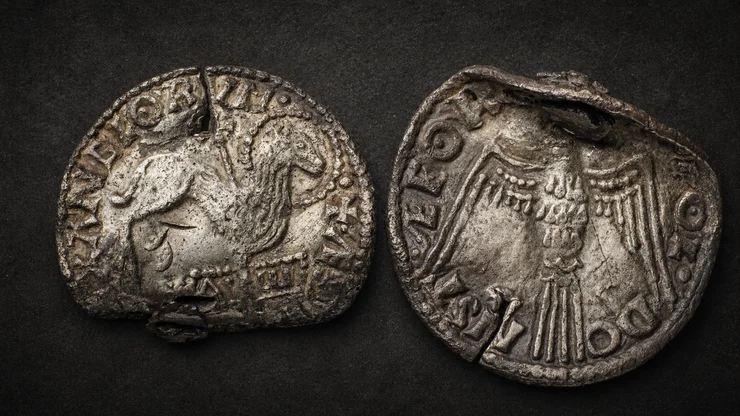
Some coins had loops for wearing as amulets or pendants
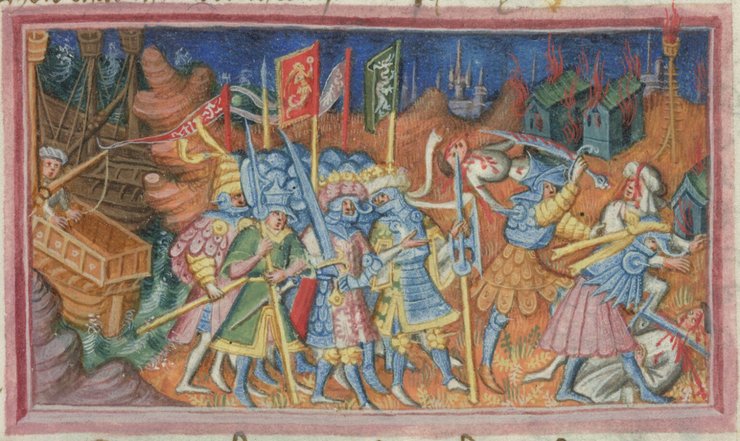
Vikings threatened England, influencing the emergence of religious symbolism on coins