

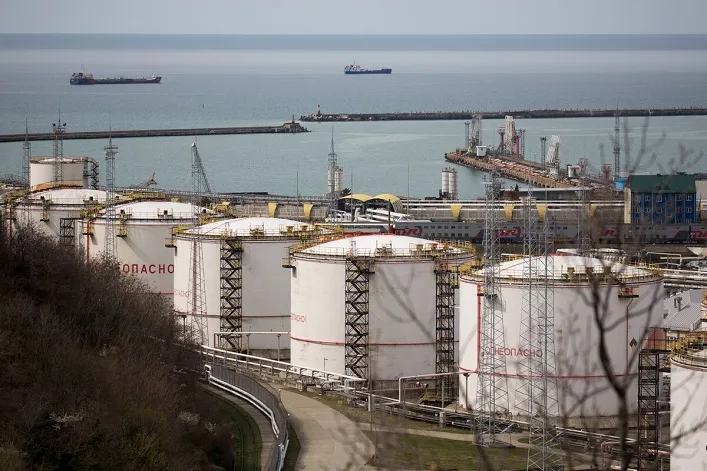
The G7 countries, which include the USA, Canada, Japan, Australia, and 27 EU member states, are already working towards limiting the Russian Federation’s revenues from energy resource exports. Since December 2022, a price cap of $60 per barrel has been in place for Russian crude oil, along with an EU embargo on maritime shipments of this raw material.
This is reported by Finway
New Price Regulation for Oil Products
Starting from February 5, 2026, the coalition plans to extend price caps to Russian oil products, including diesel fuel, kerosene, and fuel oil. Implementing such limits is more complex than for crude oil, as the oil products market is characterized by significant diversity of goods and price dependence on the place of sale. For this reason, the G7 is considering two separate caps:
- A cap for products sold at a premium to the price of crude oil (diesel fuel, kerosene).
- A cap for products sold at a discount relative to crude oil (fuel oil).
The main goal of these measures is to reduce budget revenues for the Russian Federation while avoiding destabilization of the global energy market or a sharp increase in fuel prices for consumers.
Challenges for Europe and Additional Measures
This issue is particularly relevant for Europe, which remains dependent on Russian diesel fuel supplies. Last month, the share of Russian diesel in the total import of this fuel to Europe reached nearly 50%.
A significant decline in revenues from energy resources is already being felt in the Russian economy. Over the first ten months of this year, budget revenues from oil and gas in the Russian Federation decreased by 21.4% compared to the same period last year, totaling ₽7.5 trillion ($92.4 billion). In October alone, oil and gas revenues fell by 27% to ₽888.6 billion.
“Seven EU countries — Estonia, Finland, Germany, Latvia, Lithuania, Poland, and Sweden — have called on the European Commission to impose tariffs on Russian goods to limit funding for the war against Ukraine.”
They propose to impose tariffs on Russian iron and steel, inorganic chemicals, and potash fertilizers, which brought Moscow approximately €5.4 billion in revenue just last year.