

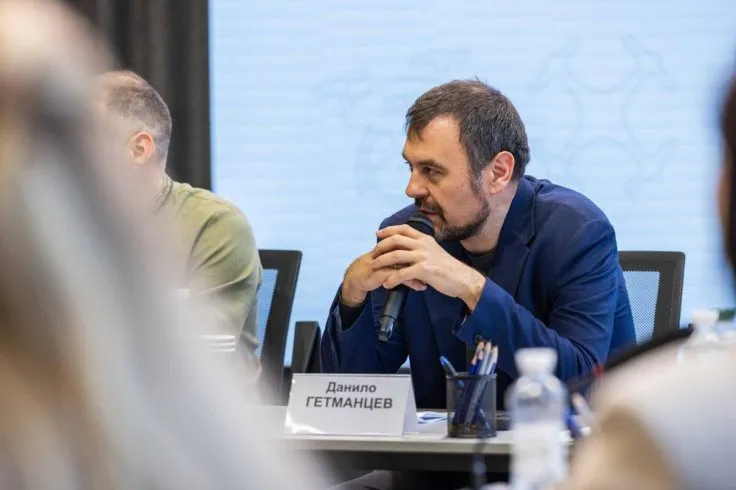
The Ministry of Digital Transformation of Ukraine has issued a sharp public response to the accusations made by Member of Parliament Danilo Hetmancev, emphasizing the existence of a systematic discreditation campaign against the ministry. In its statement, the Ministry of Digital Transformation indicates that over the past year, the agency has faced deliberate distortion of facts, manipulations, and the spread of false information about its activities.
This is reported by Finway
“Over the past year, we have constantly faced a systematic discreditation campaign based on the distortion of facts, manipulations, and the dissemination of false information.”
State Online Monitoring System and Responsibility for the Gambling Market
One of the key topics of the dispute has been the operation of the State Online Monitoring System for Gambling (DOMS). The Ministry of Digital Transformation emphasized that until 2025, the ministry had no authority to create or launch this system. The responsibility for regulating the gambling market for five years was placed on the Commission for Regulation of Gambling and Lotteries (CRGL), but DOMS has not yet started functioning. Only after transferring the relevant functions to the Ministry of Digital Transformation and creating the PlayCity agency did the process of developing the system gain practical momentum.
Lottery Market and Player Limitation Issues
Separately, the agency commented on the situation in the state lottery market. As noted by the Ministry of Digital Transformation, the modern model of this sector was formed after the adoption of the law in 2012, which defined the rules for access to the industry and its main participants. According to the ministry’s position, Danilo Hetmancev was involved in the development of legislative approaches regarding the lottery sector, and his current criticism appears contradictory.
The Ministry of Digital Transformation also explained that the right of players to independently set financial limits on gambling is enshrined in law, while the state only defines the maximum boundaries of these limitations. According to the agency’s assessment, excessive regulation may lead to a user exodus to the illegal segment, where control is absent.
Another topic was the fight against illegal gambling platforms. After the launch of PlayCity, the procedure for blocking illegal resources has significantly accelerated: currently, providers receive decisions to restrict access to illegal sites within 24 hours. The total amount of fines for violations in the market has already exceeded 80 million UAH.
In April 2026, the regulator imposed penalties on gambling organizers amounting to 946 million UAH, confirming a strict stance towards violators.
The public statement by the Ministry of Digital Transformation has become one of the harshest responses directed at MPs in recent times, indicating a deepening discussion around the future of the gambling market, the effectiveness of state control, and the transparency of digital tools in this area. The focus is on the issue of accountability for decisions that have shaped the market rules over the past decade.
The ministry’s statement came against the backdrop of a legal conflict between Acting Minister of Digital Transformation Oleksandr Borynyakov and Danilo Hetmancev. Borynyakov filed a lawsuit to protect his honor and business reputation following the MP’s public accusations regarding his possible involvement in issues related to the regulation of gambling and the implementation of digital projects.
In response, Hetmancev stated that he plans to use the court process for public discussion of issues related to the gambling market, the launch of DOMS, the implementation of the “e-Excise” system, lottery licensing, and other digital reforms. The MP also does not rule out the possibility of involving representatives of the Ministry of Digital Transformation and law enforcement agencies in the court proceedings, emphasizing the need for a transparent clarification of the circumstances surrounding high-profile state projects.