

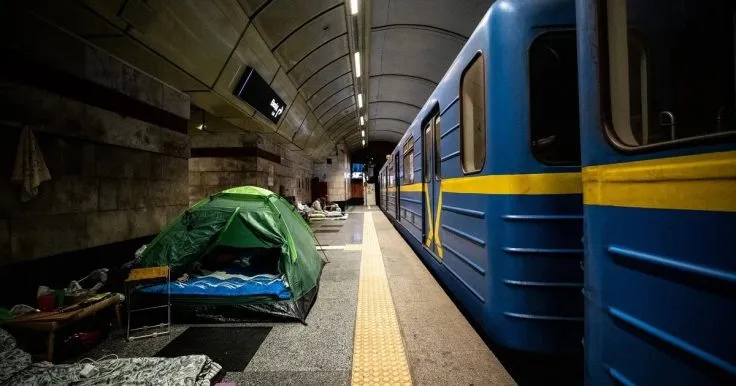
On the night of June 2, in Kyiv, before the massive missile attack by the Russian Federation, many residents of the capital tried to enter the metro stations in advance to protect themselves from possible shelling. However, at several stations, people were denied access to the underground until the official announcement of an air alert.
This is reported by Finway
Incidents at metro stations during the wait for the attack
According to reports from Kyiv residents on social media, several hours before the start of the shelling, residents arrived at the “Kharkivska”, “Pozniaky”, and “Akademmistetko” stations with their belongings and pets. However, metro employees and police did not allow them to enter the platforms, forcing them to wait by the turnstiles until the official alarm signal. It was during such a wait at “Kharkivska” that one woman fainted, prompting demands from Kyiv residents for police and metro staff to let people into the shelter and provide first aid.
“According to metro rules, citizens are allowed to enter the station without obstruction during an air alert and after the completion of passenger transport in the evening. Therefore, to access the platform, one had to either pay for the fare or wait for the last train to pass, which was explained to passengers by a metro employee and a police officer,” the law enforcement officials noted.
Similar situations were recorded at other stations—there, people were advised to come only after the alert had begun, which caused outrage among city residents. On social media, there were calls to film such incidents and demands for appropriate personnel decisions regarding employees who, in the opinion of Kyiv residents, were ineffectively organizing the operation of shelters in the metro during wartime.
Police explanation and city authorities’ reaction
The Kyiv police explained that at the time of the conflicting situations, the air alert had not yet been announced, and the metro was operating in standard mode. Only after the alarm signal or the completion of train movement are the stations officially used as shelters for the population. At the same time, it was noted that people were not prohibited from being in the vestibules, and after the metro stopped operating, all those willing were allowed into the stations for shelter.
On the night of June 2, Kyiv suffered a powerful missile strike from Russian troops, resulting in damage to various areas of the capital, fires, and destruction. According to the latest official data, the number of injured has risen to 64 people, and four people have died.
Additionally, a discussion has erupted on social media regarding the use of large tourist tents in the metro during air alerts. Some Kyiv residents believe that such tents take up too much space and create inconveniences for others. The Kyiv City Military Administration stated that it is studying the possibility of introducing appropriate restrictions to improve the organization of shelters in the metro.