

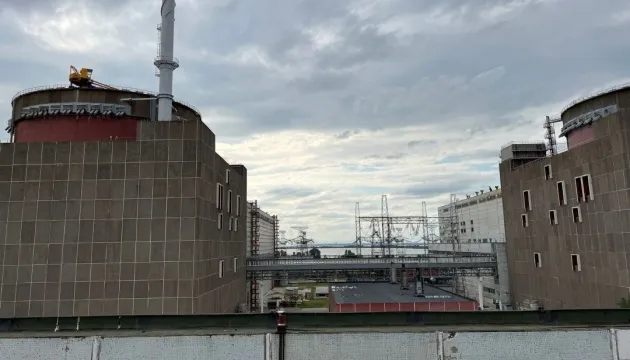
This week, a prolonged communication failure occurred at the Zaporizhzhia Nuclear Power Plant, coinciding with an escalation of military actions in the region. According to the International Atomic Energy Agency (IAEA), the incident lasted approximately 12 hours — the longest instance of communication loss at the plant since the beginning of the full-scale war.
This is reported by Finway
Interference with plant operations and safety risks
According to the occupying administration, during this time, the Zaporizhzhia NPP was without landline telephone communication and internet. The reasons for the disconnection are currently unknown, but it coincided with reports of attacks on the city of Enerhodar, where most of the plant’s workers reside. The IAEA clarified that they have no information regarding the party responsible for the attacks.
“For many hours, we were unable to contact our team of experts on site, and the plant could not communicate with the outside world in the usual way. This was undoubtedly a very concerning event from the perspective of nuclear safety and physical security. The IAEA team will continue to investigate the causes of this communication failure and discuss how to prevent its recurrence,” said Grossi.
Throughout the past week, the electricity supply to Enerhodar was also repeatedly interrupted due to hostilities. On May 25, the occupying administration reported drone attacks on civilian facilities in the city, including a fire station.
Issues with backup power and diesel fuel
Due to the deteriorating security situation at the plant, the supply of diesel fuel from a neighboring storage facility for the operation of steam generators used for water purification was temporarily suspended. However, there is a stock of diesel fuel at the Zaporizhzhia NPP that will last for more than 10 days for the operation of emergency generators. These generators remain critically important for maintaining backup power in case of loss of external electricity supply, which has already occurred multiple times during the war.
Grossi emphasized that the continuous availability of diesel fuel is vital for nuclear safety, especially considering the plant’s dependence on a single power line that is crucial for cooling the reactors. Any disruptions in the supply of diesel fuel worsen the facility’s resilience in an extremely vulnerable situation regarding external energy supply.
As of May 2026, all six reactors at the Zaporizhzhia NPP have been shut down since 2022 but still require cooling. A backup 330 kV power line “Ferroplavna-1” is used for this purpose, as the main “Dnipro” 750 kV line was disconnected on March 24. Before the hostilities began, ten power lines were operational at the plant.
Incidents involving hazardous situations have also occurred at other Ukrainian nuclear power plants. In particular, on May 22, a fire occurred at the “Dnipro” substation due to a military strike, causing the South Ukrainian NPP to disconnect one of its power lines. Over the past week, the Chernobyl site has recorded the flight of 20 drones in the monitoring zone.
The Zaporizhzhia NPP has been dependent on a single external power supply line for over two months, and the IAEA continues negotiations with Ukraine and the Russian Federation regarding a local ceasefire to carry out repair work on the 750 kV power line. This is already the sixth attempt to restore the line since the end of last year. The challenge lies in the fact that the damage site is located on high towers in the riverbed near the front line, creating significant technical and logistical difficulties for repair crews.