

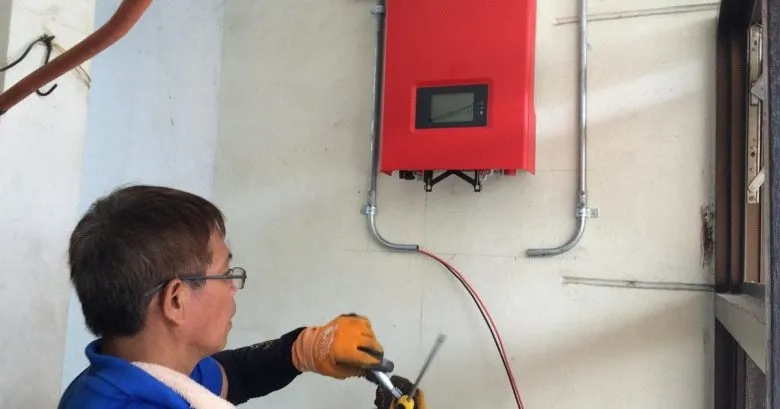
During power outages, Ukrainians are increasingly using inverters and batteries. However, the duration of their operation is determined not only by the battery capacity but also by the load on the system and the operating conditions.
This is reported by Finway
Inverter Power and Battery Features
According to engineer Dmytro Korol, most inverters are designed for a specific power output at any given moment, rather than a fixed operating time. This leads many users to make mistakes when choosing a device.
In everyday use, 12-volt inverters are most commonly connected to car batteries. A standard battery provides a maximum current of about 100 amps, which corresponds to a power of approximately 1 kW. At the same time, Dmytro Korol notes:
“People buy inverters rated for 2–7 kW, but the cables and batteries simply cannot deliver that power. It’s marketing.”
Professional batteries can provide power exceeding 1 kW, but they are large and difficult to accommodate in an apartment. Cables also play an important role: inexpensive Chinese inverters often do not meet the claimed power specifications.
Actual Operating Time and Impact of Operating Conditions
The operating time of the system directly depends on the battery capacity and the load. For example, a 12 V and 100 A·h battery provides about 1.2 kWh of energy. When connected to a 500 W load, such a battery will provide over two hours of operation.
The engineer explains that a 12 V inverter can deliver about 700 W, which is sufficient for a boiler, several lamps, and charging gadgets. Under this load, the system operates for 3–4 hours, and with economical energy use, up to 8 hours. Connecting high-power devices, such as a washing machine or refrigerator, significantly reduces the inverter’s lifespan or may lead to its failure.
Car batteries are not designed for prolonged continuous use. Their average lifespan under active use is about six months (up to 800 charge cycles). Lithium batteries are more durable but also significantly more expensive.
During the conversion of current, about 20% of energy is lost, so the actual operating time of the inverter is less than the theoretical one.
Temperature and Tips for Extending Battery Life
For effective operation, batteries should ideally be used at temperatures around 0°C. If the battery has been exposed to freezing temperatures, it must be warmed up before use.
- Use new batteries and fully charge and discharge them at least once every six months.
- Store batteries slightly undercharged.
- Do not leave batteries in living spaces due to the possibility of harmful substances being released — it is better to store them on a balcony, in a storage room, or hallway.
The engineer concludes:
“The system can operate for a long time if the operating rules are followed, it is not overloaded, and the battery charge is monitored.”