

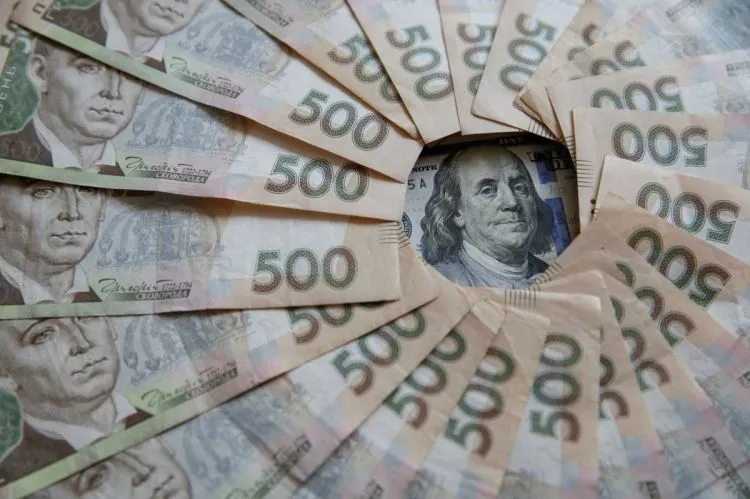
In the next two years, the currency market in Ukraine will remain under control, and the dollar exchange rate is expected not to exceed 48 hryvnias. These estimates are based on forecasts from the International Monetary Fund, the Cabinet of Ministers, and the National Bank of Ukraine, although the current rate is around 42 UAH/USD.
This is reported by Finway
Hryvnia Exchange Rate: Main Forecasts and Expectations
The head of the analytical department at “Financial Pulse,” Dilyara Mustafaieva, stated that according to official and international forecasts, in 2026–2027, the dollar exchange rate will not exceed 48 UAH. Specifically, in the draft State Budget for 2026, the Ukrainian government has set the average annual exchange rate at 45.7 UAH/USD, and for the euro at 49.4 UAH/EUR. The IMF predicts an exchange rate of 45.4 UAH/USD in 2026 and 47.5 UAH/USD in 2027.
“If the basic assumptions hold true, in 2026–2027, the dollar exchange rate will not exceed 48 UAH. The market will remain managed. However, everything will depend on the course of the war and the stability of external support,” noted Mustafaieva.
Imports, Investments, and Reserves: Impact on the Currency Market
Mustafaieva forecasts that the excess of imports over exports will decrease from 55.8 billion UAH (at the end of 2025) to 42.8 billion UAH in 2027. At the same time, the coverage of imports by exports will increase from 50% to 61%. An important factor will also be the expected growth in the inflow of investments and debt capital starting in 2027, which should restore market participants’ confidence and reduce demand for cash currency.
International assistance remains critically important for the stability of the financial system and for preventing budget financing through emission. In particular, in 2026, Ukraine plans to receive over 45 billion dollars in external support, and in 2027, 39 billion dollars. According to the NBU’s forecasts, gold and foreign exchange reserves will reach 54 billion dollars by the end of 2025, allowing for the coverage of imports for 5.5 months, and in 2027 this figure will exceed 6 months.
However, the expert emphasizes that the main risks for the exchange rate remain military actions, including the intensity of shelling, destruction of infrastructure, a decline in production activity, irregularity of external financing, and increased migration processes.