

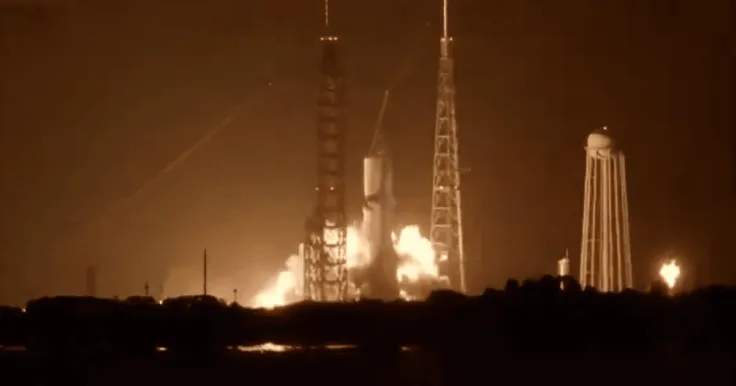
The explosion of the New Glenn rocket by Blue Origin at the launch pad in Florida poses a serious threat to the ambitious plans of US President Donald Trump to return American astronauts to the Moon by 2028. As a result of the incident, NASA will likely have to rely more on the technologies of SpaceX.
This is reported by Finway
Consequences of the Explosion for the US Space Industry
One of the key rockets that NASA was counting on for future lunar missions exploded during testing, which is a significant blow for Blue Origin. The company’s owner, Jeff Bezos, aims to compete with Elon Musk and his SpaceX, but this accident could delay Blue Origin’s programs indefinitely. Experts estimate that the damage to Blue Origin’s only launch pad at Cape Canaveral requires extensive repairs, which could take several months.
Blue Origin had planned to conduct a lunar mission this year, but due to the explosion, the launch will likely have to be postponed. NASA had just announced its intention to launch the uncrewed Blue Moon Mark 1 lander in the fall, but these plans now require reassessment. The company is working on creating another launch complex in Florida, but the timeline for completion remains unknown.
The Role of SpaceX and the Prospects of the Lunar Return Program
NASA is accelerating its efforts to establish a permanent base on the Moon to outpace China in the exploration of Earth’s satellite. However, the New Glenn accident could significantly impact these ambitions.
“Spaceflight does not forgive mistakes, and developing new heavy launch capabilities is extremely challenging,” said NASA Administrator Jared Isaacman, emphasizing the need for a thorough investigation into the “anomaly” during the launch.
The administrator also promised to soon analyze the potential impact of the accident on future space missions. Sources at NASA suggest that the recovery of Blue Origin’s launch pad could delay the lunar campaign by at least a year, which automatically increases the importance of collaboration with Elon Musk’s company.
On May 23, SpaceX successfully conducted a test launch of the largest Starship V3 rocket. The vehicle launched from Starbase in Texas, spent about an hour in space, and landed in the Indian Ocean. This success further solidifies SpaceX’s leadership in the field of heavy space launches and provides NASA with additional opportunities to carry out its lunar plans in the coming years.