


Researchers have discovered that the friendship between humans and dogs began much earlier than previously thought. Scientists found a fragment of a jawbone belonging to a dog in a Somerset cave, dating back approximately 14,300 years, during the late Upper Paleolithic period.
This is reported by Finway
Ancient Bonds Between Humans and Dogs
DNA analysis conducted on the discovered fossil confirmed that the bone belonged to a dog, not a wolf. This finding represents the oldest evidence of dog domestication in Britain, pushing previous estimates back by several millennia. The authors of the study emphasize that these results provide a unique insight into how long the friendship between humans and dogs has lasted.
“According to one of the lead authors of the study from the Natural History Museum, Dr. William Marsh, these early domesticated dogs were incredibly similar to wolves, but there is evidence that they were treated ‘like people’.”
The remains of the bone were found in the Gough Cave, indicating the earliest case of dog domestication in Britain. The cost of their maintenance was high, suggesting that these animals likely held significant importance for humans. However, researchers note that it is currently difficult to determine the exact role of these dogs—whether they were hunters, guardians, or companions.
Genetic Research and New Discoveries
Scientists from 17 research institutions collaborated on the project, examining archaeological finds over 10,000 years old from the Gough Cave in Somerset and Pınarbaşı in Turkey. The DNA obtained from the fossils was compared with genetic data from over 1,000 modern and ancient dogs and wolves from various regions of the world. This allowed researchers to establish that the bones indeed belonged to dogs, and their coexistence with humans began over 14,000 years ago—5,000 years earlier than previously believed.
Study author Simon Parfitt from the Institute of Archaeology at University College London notes that the first clue regarding the bones’ belonging to dogs was their unusually small size compared to the large wolves of that time. The research also showed that ancient dogs and humans likely had similar diets. Additionally, after death, animals were treated in the same manner as humans.
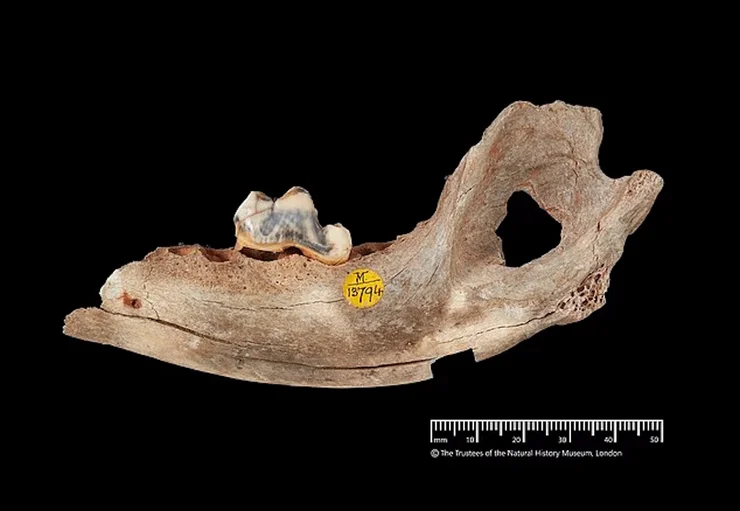
The fragment of the jawbone discovered in the Gough Cave is the oldest evidence of dog domestication in Britain. Photo: NHM London