

Foreign ministers of European Union countries are consulting on possible actions in the Strait of Hormuz, which is strategically important for global oil and fertilizer transportation. This location has gained particular attention due to recent statements by U.S. President Donald Trump regarding the future of the North Atlantic Alliance and the need to involve allies in ensuring maritime security in the region.
This is reported by Finway
Concerns of European Diplomats
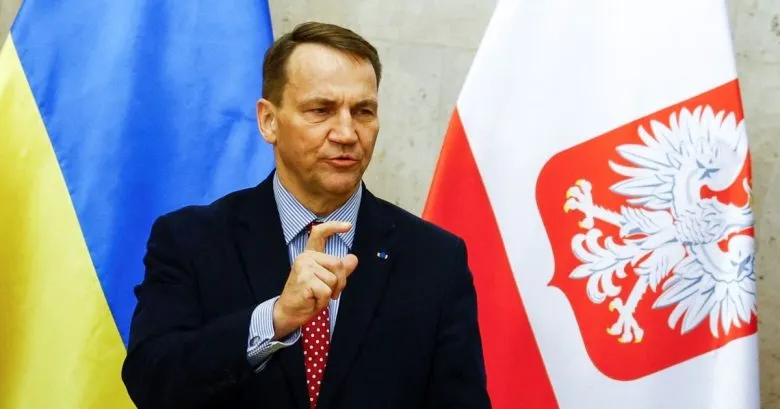
During the discussion of Trump’s calls for European partners to open the Strait of Hormuz, Polish Foreign Minister Radek Sikorski pointed out that the American president is separating his country from NATO. He emphasized that formal procedures within the alliance have not yet been activated, although theoretically Turkey could initiate consultations under Article 4, as occurred in cases of threats from Russian drones or aircraft to Poland or Estonia.
“It is somewhat concerning that President Trump speaks of NATO as ‘them’ or ‘Europe,’ rather than ‘us.’ There are appropriate procedures. As far as I know, they have not yet been activated in NATO… Turkey could request consultations under NATO Article 4 (consultations among allies when one or more states believe there is a threat to their security – ed.), as was the case when Russian drones or aircraft approached Poland or Estonia… If there is a request through NATO, we will certainly consider it very carefully out of respect and sympathy for our American allies,” Sikorski noted.
The new head of the Dutch foreign ministry, Tom Berendsen, emphasized that Europe is aware of the expectations of the current and previous U.S. administrations regarding greater involvement of European states in NATO affairs. At the same time, he stated that the question of the real possibilities and appropriateness of actions in the Strait of Hormuz still requires detailed analysis.
Risk Assessment and Lack of Decisions
Berendsen stressed the seriousness of potential decisions regarding actions in the region and emphasized that no specific decisions have been made yet, and their appropriateness and effectiveness still need to be clarified. German Foreign Minister Heiko Maas added that despite the common interest of allies in freedom of maritime navigation, NATO has not made any decisions regarding actions in the Strait of Hormuz. He also noted that European countries are expecting clarity from Israel and the U.S. regarding the achievement of their military objectives in Iran, after which further decisions can be made.
It is worth recalling that U.S. President Donald Trump previously warned that NATO could expect a “very bad” future if allies do not contribute to unblocking the Strait of Hormuz. This transport hub is key to the global oil market, and its blockade by Iran amid the war with the U.S. and Israel has already led to rising oil prices and increased costs for consumers in many countries.
In an interview published in March 2026, Trump emphasized that just as the U.S. supported Ukraine in its war with the Russian Federation, he expects active participation from European allies in measures regarding the Strait of Hormuz. Disruptions in shipping have already caused a rise in oil prices and increased living costs for hundreds of millions of people worldwide. The U.S. president also clarified that he expects allies to provide minesweepers and “people who will take out some of the bad actors along the coast of Iran.”