

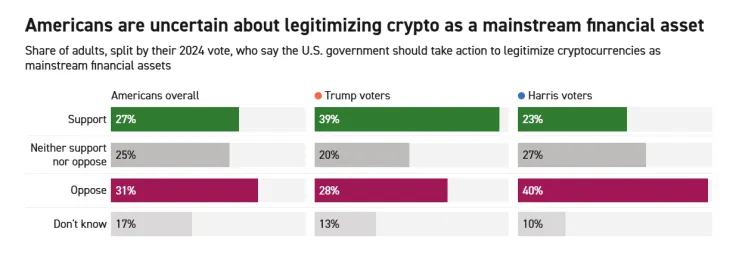
According to the results of a survey conducted among American voters, the issue of cryptocurrency has little impact on their choice of candidates. Only 4% of US citizens indicated that politicians’ positions on digital assets play a role in their voting. This is the lowest percentage among all political topics considered in the study.
This is reported by Finway
Americans remain skeptical about cryptocurrency
The majority of respondents have a negative or skeptical view of digital assets, not considering them a truly important topic for themselves or the country. Only 18% of respondents believe that lawmakers should prioritize regulating the crypto market. Significantly more people (49%) consider housing affordability to be a more pressing issue, while another 36% emphasize the need to protect consumers from financial fraud.
Additionally, 45% of Americans are convinced that cryptocurrencies are too volatile as assets, while only 25% view them as a justified investment risk.
“No,” replied Senator Cynthia Lummis when asked whether cryptocurrency policy concerns average voters.
The senator added that most voters are more concerned about everyday expenses and the rising cost of living. She is supported by Senator Thom Tillis, who noted that people generally do not understand the difference between Bitcoin, stablecoins, and blockchain technology, which keeps interest in cryptocurrencies among the population low.
Despite this, cryptocurrency industry lobbyists are actively investing in political campaigns. In 2026, industry-related super PACs allocated about $200 million to support candidates who are favorable to cryptocurrencies.
The US Congress continues to advance cryptocurrency legislation
Despite the lukewarm interest from voters, the US Congress is not halting its work on legislative initiatives in the field of cryptocurrency. On May 14, 2026, the Senate Banking Committee plans to vote on the CLARITY Act. The bill aims to create clear rules for the crypto market and integrate digital assets into the country’s financial system.
Proponents of the initiative argue that these changes are important not only from a political perspective – they have strategic significance for the long-term competitiveness of the US in the field of blockchain technologies.
However, the survey results indicate that a significant portion of support for cryptocurrency laws is more related to extensive lobbying by the industry than to actual public demand, the authors of the study emphasize.
