

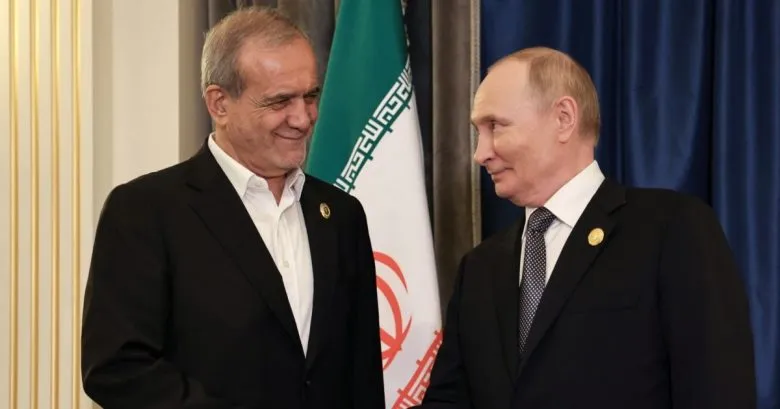
American officials have confirmed that Russia is transferring intelligence data to Iran, which is being used to carry out strikes against American troops and facilities in the Middle East. This information came to light through reports from US officials who provided the information on the condition of anonymity.
This is reported by Finway
Details of Cooperation Between Russia and Iran
While the specific mechanisms and scale of the intelligence exchange remain unknown, sources emphasize that this cooperation increases the threat to American forces in the region. The Russian embassy in Washington did not comment on these reports, and official representatives of the Kremlin publicly labeled the war against Iran as an “unprovoked act of aggression.”
It is known that The Washington Post also reported on the transfer of intelligence data from Russia to Iran, citing its own sources.
Assessments in the US and Political Reactions
US intelligence agencies have refrained from making public comments regarding these facts. Meanwhile, the White House emphasized that such assistance has not had a significant impact on the course of hostilities. Spokeswoman Anna Kelly stated:
“Their response with ballistic missiles is decreasing every day, their fleet is being destroyed, their production capabilities are being shattered, and their proxies are offering little resistance.”
Another White House representative, Caroline Levitt, added that despite reports of intelligence support from Russia, it does not affect military operations in Iran. According to her, the Iranian navy has become “ineffective in combat,” and Washington is on the path to full control over Iranian airspace. Levitt stressed that Iran will be forced into “unconditional surrender” when President Donald Trump determines that there is no longer a threat from this country.
President Trump also stated on social media that “there will be no deal with Iran except for unconditional surrender.”
At the same time, reports of cooperation between Moscow and Tehran have drawn criticism from American lawmakers. Democratic Senator Jean Shaheen emphasized that Russia’s potential involvement demonstrates an increasing threat from its side, and she called President Trump’s actions to ease sanctions and his reluctance to support Ukraine unacceptable and provocative of further aggression against Americans. A similar position was expressed by Republican Congressman Don Bacon, who underscored that Russia and Iran have close ties and urged the US to provide Ukraine with modern weaponry and strengthen sanctions against the Russian economy.
Experts believe that the exchange of intelligence data is currently the most realistic form of assistance that Moscow can provide to Iran due to its own losses in the war against Ukraine and limited capabilities for supplying weapons. Glen Howard, president of the Saratoga Fund, believes that Russia is helping to sustain Iran’s drone program through production at a factory in Tatarstan. According to him, about 3,000 Shahed drones are produced there each month, significantly exceeding Iran’s domestic capabilities.
Analysts also point to the importance of logistical routes through the Volga River and the Caspian Sea, which are used for the safe transportation of equipment between the two countries. Such logistical and intelligence connections could become critical for the Iranian regime in the event of a protracted conflict.
Russia and Iran have a long history of military, political, and diplomatic relations. Iran has already provided Russia with Shahed drones that are used to attack Ukrainian infrastructure, and now this technology is mostly produced directly on Russian territory.