

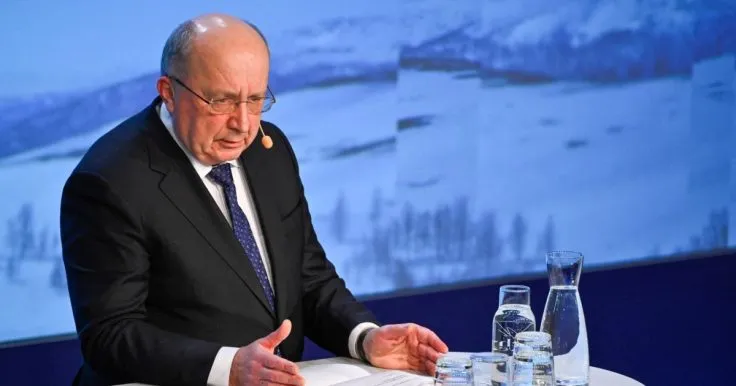
Ukraine is gradually gaining an advantage on the front, which is forcing the leadership of the Russian Federation to seek ways to reduce support for Ukraine from European countries. This, according to EU Commissioner for Defense Andrius Kubilius, explains Putin’s recent chaotic attacks. He voiced this position on June 1 during a speech before the NATO Parliamentary Assembly in Vilnius.
This is reported by Finway
The Importance of Supporting Ukraine and Defense Reforms in the EU
According to Kubilius, the more successful Ukraine becomes on the battlefield, the more nervous and desperate Putin becomes. He emphasized that the goal of the Russian leader is to intimidate the residents of Europe and the region so that the local states cease their support for Ukraine. At the same time, as the EU Commissioner stressed, Europe’s response should not be retreat but rather a doubling of efforts in defense, particularly increasing funding, arms production, strengthening the eastern flank, and further supporting Ukraine.
“The more Ukraine achieves success, the more nervous and desperate Putin becomes. Putin’s goal is to scare people in this region and in Europe so that we might stop supporting Ukraine. Our response is not to retreat but to double our efforts: increase defense spending and production, support the eastern flank, and support Ukraine.”
Kubilius emphasized the need for a deep discussion regarding the future of the European defense system, especially in light of the gradual reduction of the US role on the continent. He pointed out that there is no unified defense market in the EU, and most procurements are made by national governments from their own companies without transparent tender procedures.
Ukraine as an Example of Effective Defense Production
The EU Commissioner highlighted that the Russian Federation currently produces more defense products than EU countries, which poses a potential threat to European security. He called on the parliaments of EU member states to question their governments about the insufficient scaling of their own defense industries, despite increased budget funding.
Kubilius cited Ukraine as an example of dynamic development in the defense industry: since 2022, its production volumes have increased fiftyfold, reaching a level that defense enterprises in Germany or France could achieve in a year. According to him, Ukraine has sharp competition, market mechanisms, and rapid innovations, while Europe lacks a unified market, competition, and industrial growth.
Kubilius also stressed the importance of advancing Ukraine’s membership in the European Defense Union before its accession to NATO, as the EU accession process may take longer. The official noted that Ukraine has one of the best armies in Europe, and possibly in the world, and added that the integration of Ukrainian troops into the European security system is key for the continent.
On May 25, the Russian Foreign Ministry announced possible strikes on so-called “decision-making centers and command posts” in Kyiv, urging foreign citizens, including diplomats and representatives of international organizations, to leave the capital of Ukraine immediately.
The Ministry of Foreign Affairs of Ukraine responded by stating that the level of security threats to Kyiv and other Ukrainian cities remains stable, and the new threats from Russia are, according to the Ministry of Foreign Affairs, “nothing more than shameless blackmail.” The Ukrainian ministry assured that it is ready to enhance security for foreign diplomatic missions if appropriate requests are made.
Later, US Secretary of State Marco Rubio reported that in a phone conversation, Russian Foreign Minister Sergey Lavrov personally reminded him of the Kremlin’s warning, stating that “Kyiv will be a very dangerous place.” At the same time, Rubio emphasized that the city has been dangerous for several years and stressed the readiness of the US to participate in resolving the war between Russia and Ukraine.
At the UN Security Council meeting on May 28, the United States sharply criticized Russia’s position and urged it to refrain from promised systematic strikes on Kyiv.