

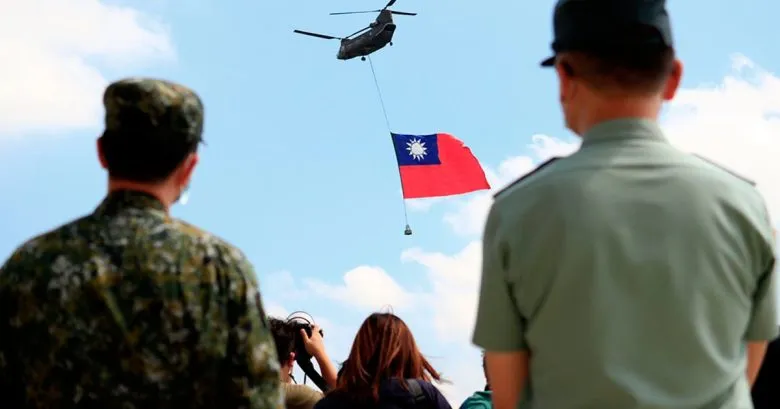
The People’s Republic of China proposed an agreement to Taiwan on March 18, which includes energy stability in exchange for increased control by Beijing over the island. This initiative is another step by the PRC in its efforts to reclaim Taiwan, which has long been a focal point of special attention from the Chinese authorities.
This is reported by Finway
Energy Security as a Tool of Influence
Amid ongoing instability in the Middle East, particularly due to the closure of the Strait of Hormuz, governments around the world are actively seeking alternative energy sources. Before the conflict between the U.S., Israel, and Iran, Taiwan imported about one-third of its liquefied natural gas from Qatar, while not purchasing energy resources from China. However, the island’s authorities now assure that they have secured alternative supplies, including from the U.S., which is a key partner for Taiwan.
During a speech at a meeting of the Democratic Progressive Party in Taipei, Taiwan’s President Lai Ching-te stated that energy supplies to the island in March and April are fully guaranteed. Starting in June, there are plans to increase imports of American gas. Lai Ching-te emphasized:
“Taiwan has adopted a diversified and multi-source strategic approach to energy imports.”
At the same time, Chen Binhua, a representative of the Taiwan Affairs Office of the PRC, assured that “peaceful reunification” would allow Taiwan to achieve more reliable energy security with the support of China. According to him, after reunification, there are plans for a complete restoration of transportation links across the Taiwan Strait, which is expected to resolve the issues of electricity, gas, and oil shortages on the island.
Taiwan Rejects PRC’s Conditions
The official authorities of Taiwan are currently refraining from detailed comments on Beijing’s proposal and do not recognize the PRC’s claims to the island’s sovereignty. Taipei continues to emphasize that only the residents of Taiwan have the right to determine the country’s future. Taiwan also categorically rejects autonomy under the “one country, two systems” model, considering this idea unacceptable. None of the leading political parties on the island support the scenario proposed by China.
Despite diplomatic statements, China does not rule out the possibility of a military scenario for reclaiming Taiwan. As early as July 2023, leaders of major companies such as Apple, Nvidia, Advanced Micro Devices, and Qualcomm were briefed by representatives of the CIA and U.S. national intelligence regarding potential military actions by the PRC against Taiwan in 2027. It was noted that such developments pose significant risks to the global economy, as Taiwan produces about 90% of the world’s most advanced microchips.
The Eastern Theater Command of the People’s Liberation Army of China has even begun publishing videos outlining possible attack plans on the island. On December 29 of last year, China commenced large-scale military maneuvers off the coast of Taiwan, coinciding with the U.S. announcement of one of the largest defense aid packages for the island.