

US Treasury Secretary Scott Bessent expressed hope that European Union countries will support the implementation of new secondary sanctions against states that assist the Russian Federation, particularly through the purchase of its oil. According to him, these restrictions could be applied if Russia fails to meet the conditions of Donald Trump’s ultimatum and continues its military aggression.
This is reported by Finway
Possible Consequences of Secondary Sanctions
Bessent emphasized that countries purchasing oil subject to sanctions may face additional tariffs of up to 100%. These measures aim to limit the financial capabilities of the Russian Federation and reduce its revenue from energy resource exports.
“Any country that buys Russian oil subject to sanctions will be subject to secondary tariffs of up to 100%,” the Secretary reminded.
Actions of the EU, UK, and Impact on the Oil Market
Republican Senator Lindsey Graham praised the European Union’s decision to lower the cap price for purchasing Russian oil to $47.60 per barrel. However, he urged EU countries to completely halt imports of Russian energy resources before the start of peace negotiations with the Russian Federation authorities.
The United Kingdom, for its part, has intensified sanctions pressure on the Russian oil industry by introducing new restrictions covering a number of companies and 135 tankers of the so-called “shadow fleet.” These vessels have illegally transported Russian oil worth approximately $24 billion since the beginning of 2024.
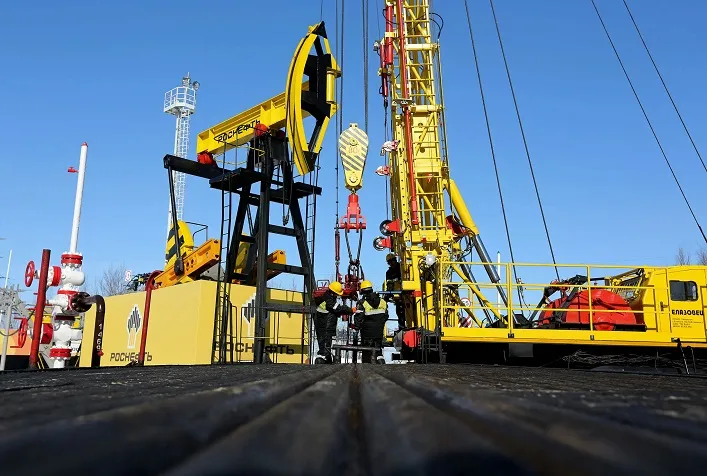
The new restrictions have also affected the plans of the largest oil company in the Russian Federation, Rosneft, which intended to sell its stake (49.13%) in the Indian Nayara Energy. Due to EU sanctions, this deal is now under threat, and Rosneft itself cannot repatriate profits from India for several years.
Additionally, energy giant BP has canceled the purchase of 60,000 tons of diesel fuel produced at the Nayara Energy refinery in India due to the new EU sanctions.