

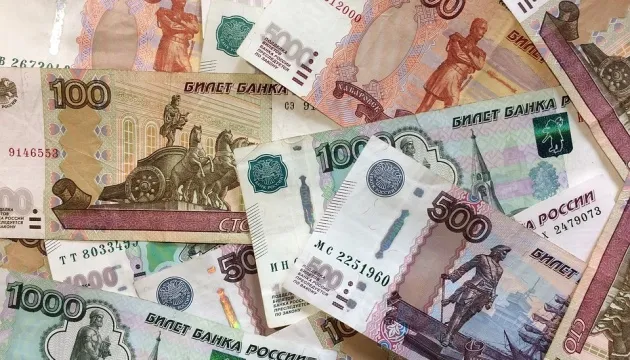
The federal budget of the Russian Federation experienced a deficit of $69.9 billion in January–February 2026, nearly double the previous estimate by the Russian Ministry of Finance of $43.3 billion. By the end of the first two months of the year, the cash deficit had already surpassed the entire annual planned figure of $50.5 billion, indicating a loss of control over the country’s fiscal policy.
This is reported by Finway
Discrepancies in Reporting and a Massive Collapse in Oil and Gas Revenues
The situation is further complicated by an unprecedented discrepancy in financial reporting between the Federal Treasury and the Russian Ministry of Finance. The Treasury reported revenues of $31.36 billion, while the Ministry of Finance’s report indicated this amount to be $59.79 billion—almost twice as much. Meanwhile, expenditures differ only slightly: $101.47 billion according to the Treasury versus $103.10 billion according to the Ministry of Finance.
Western economists consider such discrepancies a sign of systemic uncertainty in Russia’s budget accounting and a likely overestimation of revenues in the Ministry of Finance’s forecasts. The minor difference in expenditures suggests that the Kremlin does not plan to cut government spending despite the sharp decline in revenues.
Analysts’ Forecasts and Risks for the Russian Economy
The main reason for the budget failure was a record decline in oil and gas revenues: in the first quarter of 2026, they fell to $18.1 billion, which is 45.5% lower year-on-year—this is the worst figure since 2022. At the same time, budget expenditures remain high due to significant allocations for the security and defense sector, creating a persistent structural imbalance.
Experts and Russian analytical centers, including the pro-Kremlin TsMAKP, predict that the annual budget deficit could reach two to three times more than the official plans if energy revenues remain low and expenditures continue to rise.
“The current situation demonstrates a degradation of institutional coherence in the budget process, where agencies provide contradictory data. The deficit will have to be covered by the balances in the Treasury accounts and revenues from privatization—sources that do not ensure long-term sustainability,” noted intelligence sources.
Maintaining current trends will lead to the depletion of Russia’s reserves, forcing the authorities to choose between unpopular spending cuts and seeking new sources of financing. Even if energy prices recover, the potential for revenue growth will be limited by low investment activity, structural imbalances in industry, and logistical difficulties.
Additionally, the Kremlin is already planning to reduce support for the agricultural sector amid the worsening budget crisis.