

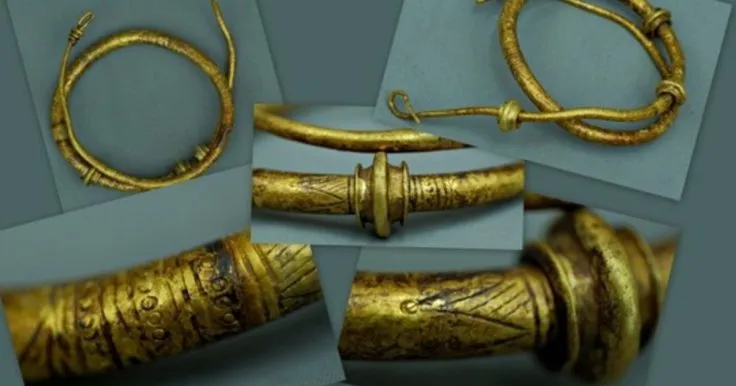
On the outskirts of the Romanian city of Urlati, archaeologists have uncovered a mysterious treasure consisting of gold necklaces, massive neck ornaments, iron discs, two small axes, and a bronze bracelet. The collection is estimated to be approximately 3000 years old, although the exact dating of the artifacts remains a subject of discussion among scholars.
This is reported by Finway
Details of the Sensational Discovery
The treasure was found by a metal detectorist on an isolated hill near a large stone, in a location where there were no visible traces of roads or settlements. The find was located about 25 centimeters underground. Among the artifacts are three massive gold neck ornaments, with a total weight exceeding 300 grams. Initially thought to be bracelets, further analysis revealed that they are likely neck rings, tightly rolled for preservation.
Among other items are iron discs, two small axes, and a bronze bracelet. The arrangement of the artifacts suggests intentional concealment of the treasure: the iron discs framed the main group of findings, while the bronze bracelet was placed at the bottom of the pit. Researchers speculate that the artifacts were once stored in an organic container, which has not survived to the present day.
“One of the gold necklaces is engraved with decorative patterns similar to motifs found on Bronze Age ceramics. Other items resemble silver artifacts from various historical periods. This unusual combination of styles and materials has made the treasure particularly significant for archaeologists studying prehistoric Europe.”
Historical Significance and Scientific Research
Experts, including archaeologist Alin Frinculeasa, note that the items may originate from different historical periods — from the Middle Bronze Age to the Early Iron Age. This creates room for discussion: some researchers believe that the artifacts were collected over several centuries, while others are convinced that the discovery could change perceptions of the chronology of similar finds in the region.
The small axes and iron discs add an air of mystery to the treasure. Experts suggest that these items may have had ritual or symbolic significance, could have been used during ceremonies, or indicated the high status of the owner. There is also a hypothesis that the treasure was hidden during a turbulent period to protect valuables from conflicts or exile, or that it represents a sacred offering related to religious ceremonies.
The next phase of research involves analyzing the composition of the gold to determine its origin and processing technologies. This will help clarify whether the prehistoric inhabitants of Romania were connected to trade networks in Europe or used local metal sources, which would indicate the development of regional jewelry-making traditions in the Late Bronze and Early Iron Ages.
The find has already been dubbed one of the most significant archaeological sensations of modern Romania. It not only impresses with the wealth and complexity of the artifacts but also raises new questions about rituals, social structures, and the exchange of values in ancient societies of the Carpathian region.
After conservation and comprehensive study, the unique treasure is planned to be displayed at the Museum of History and Archaeology of Prahova, where it will be accessible to all interested visitors.
