

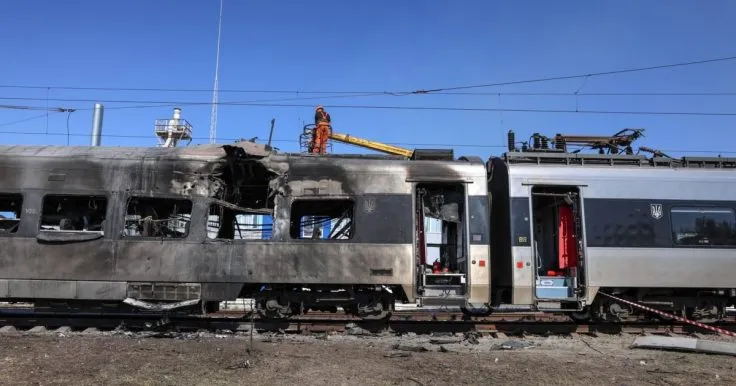
Ukrzaliznytsia is implementing a large-scale security enhancement program in response to the ongoing attacks by the Russian Federation on railway infrastructure. The company announced the deployment of over 800 modular shelters across Ukraine, produced by its own enterprises.
This is reported by Finway
Large-scale initiative to protect workers and passengers
The shelters are being installed in high-risk areas, primarily near critical facilities that ensure train movement, as well as at stations where there are no permanent shelters. These structures allow people to quickly take cover during air alerts and provide protection from debris during shelling. The company emphasizes the effectiveness of this solution:
“Such shelters allow for quick refuge during alerts and protect against debris during shelling. And this is not theory – yesterday, such a shelter in Kharkiv region saved the life of a conductor who evacuated to it in time after a warning about danger. The carriage was completely destroyed by an enemy drone,” the company reports.
This initiative has become part of Ukrzaliznytsia’s Resilience Plan, aimed at ensuring the continuous operation of railway transport even under challenging conditions and maximizing the protection of employees and passengers.
Systematic strikes on the railway and signs of genocidal actions
Since the beginning of 2026, Ukrzaliznytsia has recorded about 983 attacks by the Russian Federation on its infrastructure. On May 5 alone, railway facilities were subjected to shelling in three regions of Ukraine. Russian troops regularly use various means of destruction – strike drones, missiles, aerial bombs, and multiple launch rocket systems – to destroy transport and civilian infrastructure across the country.
The Ukrainian authorities and international organizations classify such strikes as war crimes of the Russian Federation and emphasize their targeted nature. Shelling of vital infrastructure, hospitals, energy, water supply, and communication systems is regarded as actions that bear the hallmarks of genocide. Experts note that the destruction of critical infrastructure is aimed at depriving people of the necessary conditions for life, which falls under the definition of genocidal actions, particularly according to the UN Convention on the Prevention and Punishment of the Crime of Genocide adopted in 1948.
Countries that are parties to this Convention, currently numbering 149, are obligated to prevent acts of genocide and punish them both in wartime and peacetime.
The leadership of Russia denies the fact of targeted shelling of civilian infrastructure; however, numerous pieces of evidence indicate the systematic nature of such actions against cities and villages in Ukraine, leading to the deaths of civilians, and the destruction of hospitals, schools, kindergartens, and vital infrastructure.