

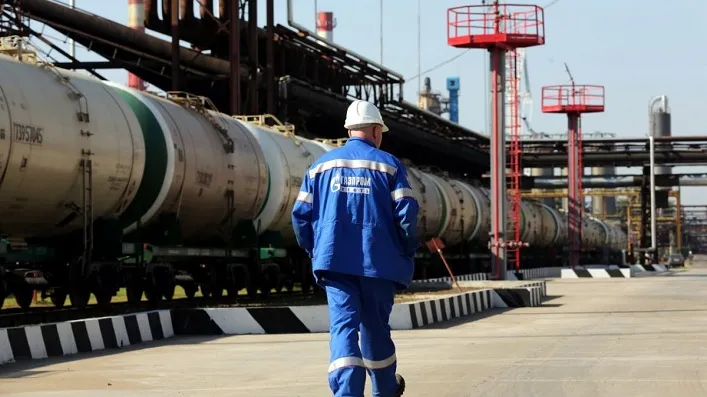
US President Donald Trump recently emphasized the possibility of implementing new sanctions against the Russian Federation to increase pressure on Moscow and compel it to end the war against Ukraine. At the 2025 Riga Conference, US Ambassador to NATO Matthew Whitaker stated that Washington still has many tools to influence Russia, among which price caps on Russian oil and gas play an important role.
This is reported by Finway
“Trump will continue to apply leverage on the RF, one of which is price caps for Russian oil and gas.”
In addition, Whitaker highlighted Trump’s demand for European countries to completely cease energy purchases from Russia.
EU Reduces Imports, but Some Countries Increase Purchases
Despite an overall reduction in imports of Russian energy resources by European Union countries by 20% over the first eight months of 2025 (to €11 billion compared to the same period last year), seven member states, including those that actively support Ukraine, have increased their purchases. In particular, France spent €2.2 billion on Russian liquefied natural gas, which is 40% more than last year. The Netherlands increased its spending on LNG to nearly €0.5 billion (+72%). Hungary raised its oil purchases by 11%, joining Slovakia with a total payment of €5 billion. In Belgium, imports of Russian LNG rose by 3%, in Croatia by 55%, in Romania by 57%, and in Portugal by 157%, although this country had previously purchased almost no energy resources from Russia.
Global Trends and the US Position
US Treasury Secretary Scott Bessent stated that Washington expects a reduction in Russian oil imports by India in the coming weeks and months. According to analysts, compared to the pre-war year of 2021, the EU has significantly reduced its dependence on Russian fossil fuels by 90%. While in 2021 European countries purchased energy resources from Russia for €133 billion, during the years of war, the total payments reached €213 billion, exceeding the amount of aid provided to Ukraine (€167 billion).
In turn, Serbia, which is a candidate for EU membership, expressed disappointment over the Russian Federation’s decision to offer a gas deal only until the end of the current year, although the country had hoped for a long-term three-year contract.