

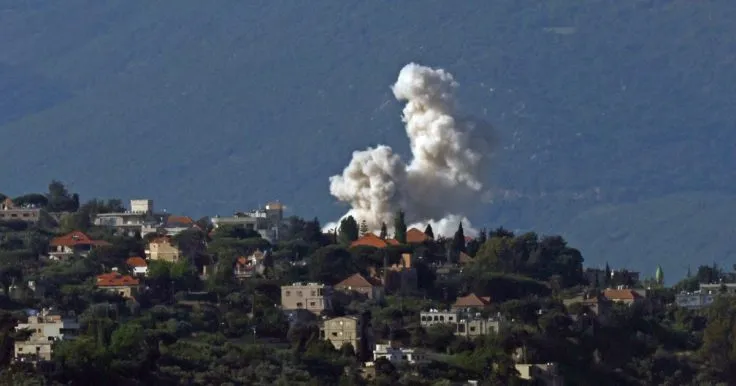
Israel and Lebanon have reached an agreement to implement a ceasefire, with the United States acting as a mediator in these negotiations. The agreement resulted from trilateral consultations that took place on June 2-3, as stated in a message on the US State Department’s website.
This is reported by Finway
Key Terms of the Agreement
According to the agreement, the ceasefire will take effect on the condition of a “complete cessation of shelling” by the Hezbollah group, which the US officially recognizes as a terrorist organization, as well as the withdrawal of all its militants from the area south of the Litani River. In addition, the parties, with the assistance of the US, agreed to quickly establish pilot zones under the control of the Lebanese Armed Forces, excluding the presence of any non-state armed groups in these areas.
During the negotiations, the participants emphasized that these steps should serve as the foundation for a comprehensive peace and security agreement between Israel and Lebanon. Both countries reaffirmed their lack of hostile intentions towards each other and agreed to continue direct dialogue to resolve contentious issues and strengthen mutual trust.
Security Framework and Positions of the Parties
During the meeting, the parties discussed in detail the security framework aimed at strengthening the sovereignty and territorial integrity of both states. They also addressed issues related to the disarmament of non-state armed groups and preventing their reformation. In a joint statement, all participants in the negotiations condemned Iran’s attacks on countries in the region and actions that, according to them, undermine the stability of the Middle East through support for proxy structures and aggressive behavior.
Washington confirmed its readiness to continue supporting the governments of Israel and Lebanon, as well as to assist in enhancing the capabilities of the Lebanese army to ensure state control over the entire territory of the country. The Israeli side noted that the country’s security is only possible with the complete disarmament of Hezbollah and the dismantling of its infrastructure throughout Lebanon. Lebanon, for its part, emphasized the necessity of adhering to internationally recognized borders and fulfilling agreements regarding the cessation of hostilities.
“These steps should pave the way for a comprehensive peace and security agreement between the two countries.”
The next round of political and security negotiations is scheduled to take place during the week starting June 22, with the participation of the US as a mediator.
It is also noted that on June 1, US President Donald Trump announced active diplomatic efforts to reach an agreement with Iran, which he wrote about on Truth Social, as well as reported contacts with Israeli Prime Minister Benjamin Netanyahu and, through intermediaries, with representatives of Hezbollah.
At the same time, the Iranian Foreign Ministry issued a statement condemning what they believe to be violations of the ceasefire by Israel, and also placed the responsibility for “the consequences and impact of this situation” on Washington.
On May 31, Israeli military reported the expansion of their operations in southern Lebanon and crossing the Litani River to strengthen their positions in the region. It is worth noting that the official ceasefire between Israel and the Iran-backed group Hezbollah was declared on April 17, but the parties have repeatedly accused each other of violating the agreements.