

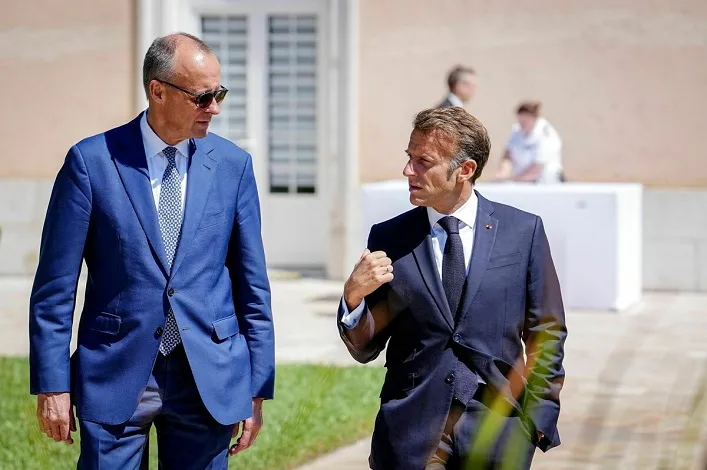
France and Germany have initiated a proposal to expand the 19th package of European Union sanctions against the Russian Federation, emphasizing the need to add key energy corporations from Russia, including “Lukoil” and Litasco. The aim of this step is to limit Moscow’s financial capabilities to continue military operations.
This is reported by Finway
Enhancing Sanction Pressure and New Proposals
In addition to including leading Russian energy companies on the sanctions list, Paris and Berlin are calling for stricter measures regarding the “shadow fleet” — tankers that facilitate the export of Russian oil. It is also proposed to extend secondary sanctions to intermediaries in third countries that aid in circumventing restrictions, as well as to strengthen measures regarding the import of Russian goods that have not yet been subject to sanctions.
France and Germany insist on expanding the recently strengthened price cap for petroleum products from Russia. In particular, there is a possibility of adding foreign oil refineries that export fuel made from Russian raw materials to the EU to the sanctions list. Additionally, the countries propose closer coordination of actions with the United Kingdom and G7 partners to enhance the effectiveness of the sanctions policy.
New Financial and Import Restrictions
The new proposals also include the idea of deeper impact on the financial infrastructure supporting the Russian economy. Among the initiatives is the consideration of new bans on imports or increased tariffs for Russian goods that have so far remained outside the sanctions.
“It is expected that by Friday, the European Union will impose sanctions on about 2,600 Russian individuals and companies.”
European Commission President Ursula von der Leyen also noted that within the next package of EU sanctions, the possibility of accelerating the phase-out of Russian energy resources is being considered.
At the same time, Ukraine has implemented new anti-Russian restrictions, synchronizing them with the sanctions policy of the United Kingdom. The restrictions target individuals and companies that support the activities of the Russian military-industrial complex, the “shadow fleet,” and the energy sector of the Russian Federation.