

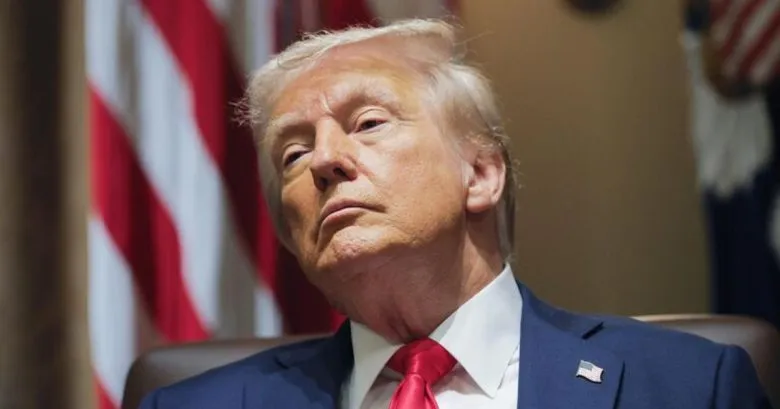
A large-scale disinformation campaign related to U.S. President Donald Trump recently erupted in the American segment of the social network X. Users widely spread rumors about his hospitalization and even death, although these claims were not confirmed by any official sources. The situation demonstrates how easily a pseudo-reality can be created around global public figures in the digital age.
This is reported by Finway
How the Information Vacuum Forms
The emergence of such rumors was caused by the so-called “information vacuum.” When a high-ranking politician does not appear in the public space for a certain period, social media algorithms and politically biased groups begin to fill this gap with assumptions. This is compounded by out-of-context photos and videos, references to “anonymous sources,” and fake insider information. Social platform algorithms instantly pick up such content, turning it into a new “sensation” regardless of the actual facts.
“As of now, there is no confirmation of either Trump’s hospitalization or, even more so, his death. Official sources have denied this. He has not disappeared, was not urgently transported to Walter Reed, and is not in critical condition. So, this is not about an event, but about an information wave.”
Political Struggle and Information Operations
An important role in the spread of fakes is played by the tense internal political situation in the U.S. In the context of deep societal polarization, every news about President Trump’s health becomes a tool in the struggle between political opponents. External players are also actively involved: Russian, Chinese, and Iranian information networks systematically use such information triggers to promote the narrative of “instability in the American system.”
Such information waves indicate that in the 21st century, reality in the media space is shaped not by facts, but by the speed and scale of their dissemination. In the absence of verified information, the space is filled with emotions, assumptions, and technically amplified rumors.
Experts emphasize: if the latest “sensation” spreads exclusively through social media and is not confirmed by any official source, it is highly likely that this is not news, but an information operation or information noise. This dynamic is characteristic not only of the U.S. but also of many countries around the world.