

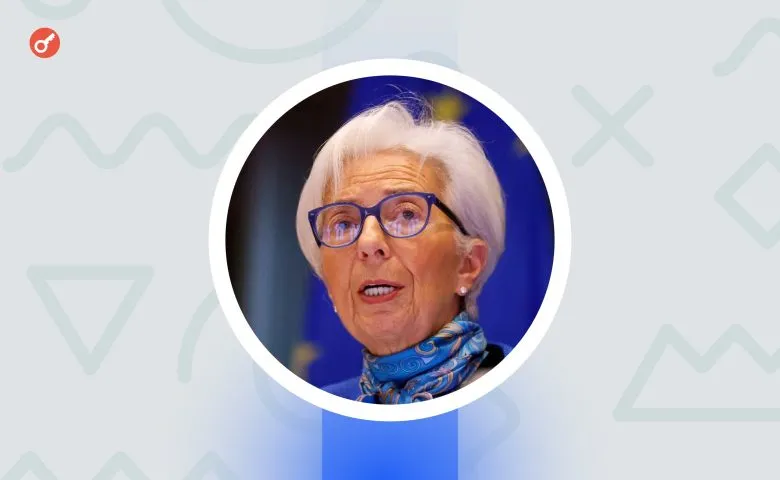
The President of the European Central Bank, Christine Lagarde, emphasized the need for stronger regulation of non-European stablecoin issuers at the ESRB conference. She highlighted that a selective approach to oversight creates additional risks for the financial system.
This is reported by Finway
EU Regulatory Initiatives on Stablecoins
In her speech, Lagarde noted that the MiCAR regulation plays an important role in reducing liquidity risk in the stablecoin sector. The document outlines two key mechanisms — mandatory redemption of stablecoins in fiat currencies at face value and a requirement for issuers to hold the majority of reserves in banks within the European Union.
At the same time, Lagarde emphasized that certain regulatory gaps remain, particularly in schemes where stablecoins are issued jointly by European and non-European counterparties. In such cases, the primary burden and risks of potential mass withdrawals fall on European issuers, and reserves to cover these obligations may prove insufficient.
“But gaps remain. One example is the so-called multi-issuer schemes, where an EU entity and a non-EU entity jointly issue interchangeable stablecoins,” she noted.
International Cooperation and Risk Mitigation
Christine Lagarde cited the approach of traditional financial institutions, which are required to maintain adequate reserve coverage across various jurisdictions. She called for a ban on stablecoin issuance schemes in the EU that do not adhere to similar regulatory standards or lack guarantees for asset transfers among market participants from different countries.
The ECB President underscored the importance of international cooperation for effective risk management in the realm of digital assets. She pointed out that without uniform global approaches, risks will always find a path of least resistance.
Lagarde acknowledged that the financial sector is rapidly evolving under the influence of innovative technologies, but core risks — liquidity shortages, leverage, sudden loss of trust, and hidden interconnections — remain pertinent. She stressed the necessity of adhering to sound risk management principles, which must remain a priority even during periods of technological change.
It is worth noting that Christine Lagarde is generally skeptical about cryptocurrencies. She has previously stated that European banks do not plan to invest reserves in Bitcoin.