

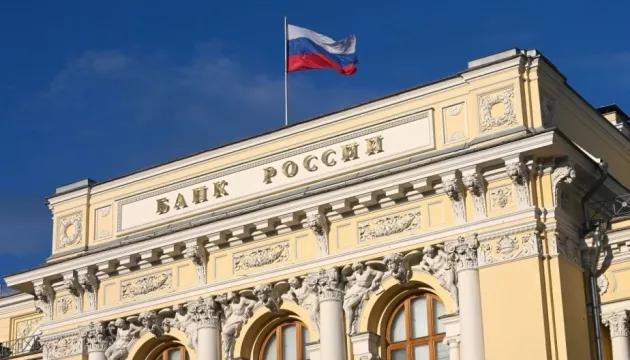
In the banking sector of the Russian Federation, the share of troubled assets has exceeded 10%. This level, according to the methodology of the International Monetary Fund, is considered the threshold for the onset of a systemic banking crisis.
This is reported by Finway
Troubled Assets and the Latent Phase of the Crisis
Analysts from the pro-Kremlin Center for Macroeconomic Analysis and Short-Term Forecasting (CMACPF) noted that the share of troubled assets in the Russian banking system has been above the critical threshold for the third consecutive month. According to them, this situation indicates a transition of the financial system into a phase of “latent crisis”.
CMACPF emphasizes that the crisis has a “latent nature”. The deterioration in asset quality is masked by the restructuring of overdue loans and the dominance of state banks, which allows for avoiding panic among depositors and maintaining the appearance of stability in the financial system.
Decline in Economic Indicators and Increase in Debts
Over the past 12 months, the growth rate of Russia’s GDP has slowed to 0.4%. Negative dynamics have persisted since 2025 and continue into early 2026.
Additionally, overdue receivables between companies have sharply increased, exceeding 8 trillion rubles for the first time, or 3.8% of Russia’s GDP. About half of Russian enterprises consider delays in payments from counterparties to be the main problem of the past year.
Furthermore, the corporate bond market in Russia is on the brink of a massive wave of defaults. The reasons for this include the worsening economic situation, the war against Ukraine, and the prolonged economic crisis.