

The European Union has announced its intention to fully cease imports of Russian gas starting January 1, 2027. This proposal is included in the 19th sanctions package presented by the European Commission in September. Thus, the deadline for stopping the purchase of Russian blue fuel has been moved forward by a year compared to previous plans.
This is reported by Finway
Key changes in the 19th EU sanctions package
As part of the new sanctions package, the European Commission proposes to ban transactions with the largest Russian energy companies, including Rosneft and Gazpromneft, which previously had exemptions. It is also proposed to significantly expand the blacklist of the so-called “shadow fleet” – the number of vessels on this list is expected to increase by 118, bringing the total number of sanctioned vessels to over 560.
“Our goal is to accelerate the gradual phase-out of Russian liquefied natural gas by January 1, 2027.”
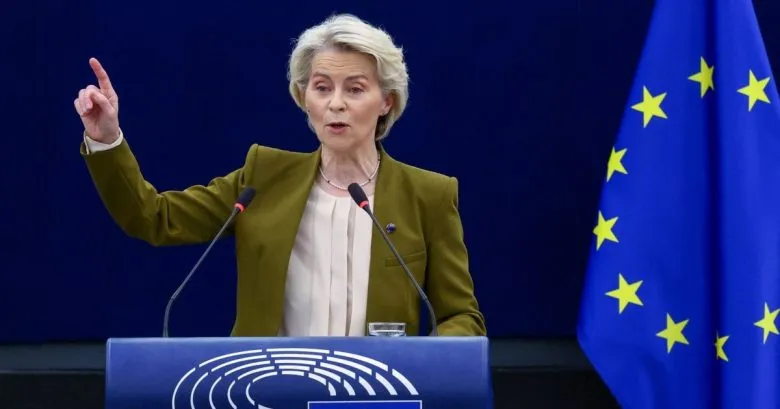
European Commission President Ursula von der Leyen emphasized the importance of diversifying energy supplies and transitioning to low-carbon energy sources. According to her, the EU is already prepared for this step, as it is actively investing in the development of alternative energy technologies and conserving resources.
New restrictions on financial operations and technologies
The sanctions package includes enhanced control over financial flows: it is planned to prohibit transactions for a larger number of banks not only in Russia but also in third countries. For the first time, operations involving cryptocurrencies and transactions through crypto platforms will be banned. The blacklist will be expanded to include foreign banks cooperating with Russian alternative payment systems, and restrictions will be introduced for organizations in special economic zones.
Additionally, the European Commission proposes to implement new restrictions on the export of goods and technologies that could be used on the battlefield. The sanctions will affect 45 Russian and foreign companies that directly or indirectly support Russia’s military-industrial complex.
According to Ursula von der Leyen, the sanctions are already having a significant impact on the Russian economy. She noted that the interest rate in Russia has reached 17%, inflation is rising, and the Russian authorities are increasingly making requests for the easing of sanctions.
She also highlighted the importance of restricting Russia’s access to modern technologies, particularly in the field of drones, and emphasized that the sanctions will remain in place until Russia begins negotiations with Ukraine for a fair and sustainable peace.
Since the beginning of Russia’s full-scale invasion of Ukraine in February 2022, the European Union has gradually reduced its dependence on Russian energy resources. Previous plans aimed to eliminate imports of Russian oil and gas by January 1, 2028, but this deadline has now been shortened by a year.