

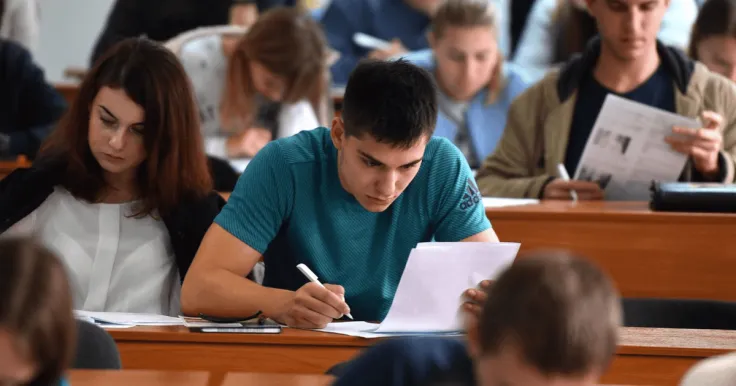
In Ukraine, the possibility of changing the current rules for granting deferrals from mobilization, particularly concerning students and individuals pursuing higher education, is being considered. The discussion of this initiative is taking place within the framework of reviewing approaches to forming the mobilization resource and staffing the Armed Forces of Ukraine.
This is reported by Finway
Possible changes in the deferral system for students
According to Alexander Fedienko, a member of parliament from the “Servant of the People” party, there are currently about 17 categories of citizens in Ukraine who are entitled to a deferral from mobilization. However, these mechanisms may be reviewed in light of updated approaches to military staffing. The deputy noted that the Ministry of Defense has not yet published a specific strategy or doctrine on this issue, making it difficult to assess the agency’s exact plans at this time.
At the same time, Fedienko suggested that one possible direction for changes could be a review of deferrals for those who are studying, especially when it comes to second or third degrees. The aim of such steps could be to expand the state’s mobilization resource.
“The deferrals provided for by current legislation need to be reviewed, and it seems to me that the Ministry of Defense may move in this direction, particularly regarding the criteria for education — first, second, or third degree. Such approaches may likely be changed to free up additional mobilization resources,” he noted.
Finding a balance between mobilization and economic needs
Separately, the deputy emphasized the issue of individuals evading their mobilization duties. According to him, millions of citizens are wanted for evasion, and some of them could potentially be recruited into the military. Fedienko stressed that a significant part of society continues to live ordinary civilian lives, not appearing at territorial recruitment centers.
The deputy drew an analogy with the banking system, where a phased mechanism of influence is applied to debtors — from warnings to enforced collection through the executive service. In his opinion, a similar algorithm could be effective for individuals evading mobilization procedures.
At the same time, he emphasized the need to maintain a balance between ensuring the country’s defense capability and supporting the economy. The state must consider the needs not only of the military-industrial complex but also of other sectors, including critical infrastructure. Transitioning to exclusively military rails, in the deputy’s view, is a risky scenario for the country’s development.
Additionally, the Ministry of Defense reports intentions to strengthen control over the activities of territorial recruitment centers, including inspections in sports clubs and fitness centers, as well as regarding cases of abuse of power by TCC employees.
Furthermore, according to the Deputy Commander of the Air Force of Ukraine, Pavel Yelizarov, the idea of depriving citizens who deliberately did not enlist in the army or go to the front of their voting rights for 10 years is being considered.