

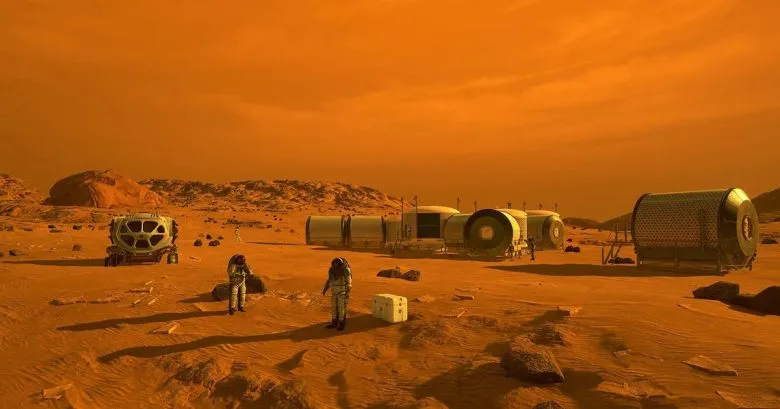
An international team of scientists has studied the impact of low gravity on Mars on human skeletal muscle tissue, which is an important aspect of preparation for future flights to the Red Planet. This research allows for a better understanding of the health risks for astronauts and helps to determine strategies for their prevention.
This is reported by Finway
What Challenges Await Astronauts on a Flight to Mars
In the next ten years, NASA and the China National Space Administration (CNSA) plan to conduct the first crewed flight to Mars. Scientists are trying to anticipate all possible problems that astronauts may encounter during and after prolonged exposure to Martian gravity. In addition to the effects of space radiation and extended stays in microgravity, the gravity of Mars itself, which is only 38% of Earth’s, poses a separate threat.
Skeletal muscle tissue is the most abundant tissue in the human body, responsible for movement and metabolism, making up over 40% of body mass. It is particularly sensitive to changes in the environment, and prolonged exposure to reduced gravity can lead to loss of muscle mass, strength, and performance. Scientists aim to determine what these changes will be like during a flight to Mars.
Results of the Mouse Experiment on the ISS
To obtain answers, researchers sent 24 mice to the International Space Station (ISS). They were placed in a special device in the “Kibo” module, where they were subjected to different levels of gravity for 28 days: microgravity, 0.33g, 0.67g, and 1g (Earth gravity). After the experiment, the animals were returned to Earth for detailed analysis of their skeletal muscle tissue condition.
The group of mice exposed to 0.33g gravity was in conditions similar to those on Mars (0.38g). Analysis showed that this gravity partially protects against muscle mass loss, but complete prevention of atrophy was only achieved at 0.67g. This level was identified by scientists as the critical threshold for maintaining muscle strength and performance during prolonged space stays.
“According to scientists, a gravity level of 67% of Earth’s is a critical threshold for preventing muscle atrophy caused by prolonged space flight.”
The results obtained indicate the need to develop special muscle strength support programs for future astronauts heading to Mars. In particular, it is important to consider conditions both during the flight and on the planet itself to minimize muscle mass loss and prevent disruptions in skeletal muscle function.
Research of this type serves as the foundation for creating new training systems and health protection technologies for the crew during interplanetary missions.