

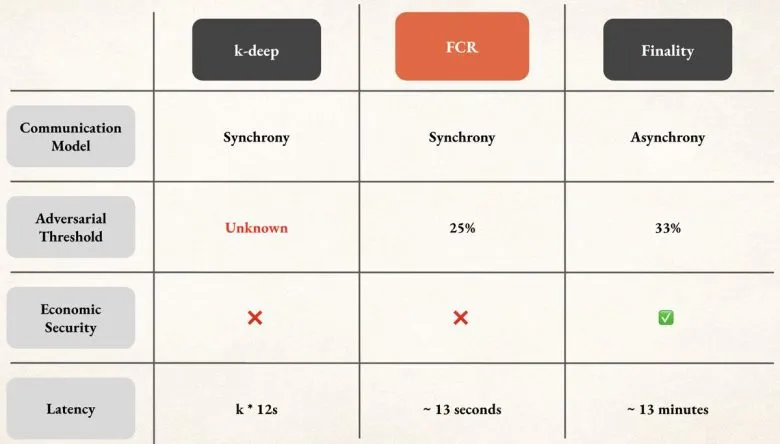
Vitalik Buterin, co-founder of Ethereum, has announced a new approach to transaction confirmations in the network that will significantly reduce waiting times for users. The proposed ’12-second rule’ allows a transaction to be considered irreversible after just one slot, which is approximately 12 seconds.
This is reported by Finway
Essence and Advantages of the New Mechanism
The new model stipulates that for a transaction to be definitively confirmed, the agreement of the majority of validators within one time interval is sufficient. As a result, the time for deposits and transfers between platforms will be reduced by 80–98%, which is particularly important for exchanges and layer two solutions. Unlike the classical approach, where the irreversibility of a transaction depends on the block depth, the new mechanism relies on the consensus of validators regarding the correctness of the block.
“The new rapid confirmation mechanism provides a guarantee that Ethereum will not be reversed after one slot (12 seconds). Security assumptions: (i) the majority of participants are honest, (ii) network latency is less than ~3 seconds. This is one step below economic finality, but very reliable for many use cases.”
In the current confirmation system, transfers and deposits can take several minutes, slowing down liquidity movement between exchanges and L2 levels. Under the new scheme, these operations will occur almost instantaneously, significantly enhancing the efficiency of the Ethereum ecosystem.
Security Features and Implementation
Buterin emphasized that the reliability of the new mechanism is based on two key assumptions: first, the majority of validators must remain honest, and second, network latency should not exceed three seconds. If these conditions are met, the system is considered resilient to most attacks, even if the level of security slightly lags behind the finality achieved through economic incentives.
An advantage of the new model is its simplicity of implementation — the update does not require global changes to the infrastructure. It fits into the strategic development plan of Ethereum aimed at increasing network throughput, enhancing privacy, and scalability.
It is expected that after the implementation of this solution, users will be able to conduct cryptocurrency transactions faster, while exchanges and layer two platforms will gain additional advantages in the form of reduced transaction processing times. This approach will be an important step towards further optimizing the Ethereum ecosystem.

Comparison of the Fast Confirmation Rule model with k-deep and finality. Data: julianma.